In the information war era, the term «Nazism» became a very popular label for propagandists. So, dear readers, let's start by analyzing the main and basic thesis of Russian propaganda - Ukraine is ruled by the Nazis. Why this is a lie?
The false ghost of «Nazism in Ukraine»
First, it is the figure of the President of Ukraine. Volodymyr Zelensky is an ethnic Jew who spoke Ukrainian at a rather weak level at the time of his election. Nevertheless, in the 2019 presidential election, he received the support of more than 70% of voters in the second round, and defeated the then incumbent President Petro Poroshenko. It should be noted that Volodymyr Zelensky, as well as later his political party «Servant of the People», received the majority of votes in all regions of Ukraine. And in the West, and in the East, and in the capital. Both Ukrainian-speaking citizens of Ukraine and those Ukrainians who speak Russian and other languages voted for him.
Second. It is important to understand that the war in Ukraine did not begin on February 24, 2022. This date is the day of the full-scale invasion of the Russian Federation into the territory of a sovereign country, which in many contexts contains signs of genocide (more on this later). The war in Ukraine began on February 20, 2022, when Russia invaded the Ukrainian peninsula of Crimea, and later resolved the bloody conflict in Donetsk and Luhansk regions of Ukraine.
Note that the official reason for the military invasion of aggressive Russia was the protection of the ethnic Russian population and Russian-speaking culture. However, ironically, as a result of hostilities, shelling of residential neighborhoods and other war crimes in Russia, which have been taking place since 2014, the Russian-speaking population of the eastern regions of Ukraine has suffered the most. For the next 8 years, after the Ukrainian authorities managed to stabilize the situation and curb aggression, Ukraine continued its economic and social development despite Russia's hybrid war. During this time, presidential, parliamentary and local elections were held regularly in Ukraine, as a result of which the government changed legally.
During this time, no repression or harassment against the Russian and Russian-speaking populations of Ukraine was recorded. This was not reported by the OSCE, the UN or any international organizations, except for those structures that were directly or indirectly funded by the aggressor state - Russia.
Moreover, in the parliamentary elections of 2014 and 2019, a political party that openly supported Russia and focused on Ukraine's further integration with the aggressor country was freely elected to the Ukrainian parliament. This is the so-called «Opposition Platform for Life», whose leaders also ran for president of Ukraine. Many of its representatives were also elected mayors of many Ukrainian cities. No restrictions were imposed on the activities of the political party.
Also, the so-called Orthodox Church of the Moscow Patriarchate, which is essentially a destructive religious sect ruled from Russia, has continued to operate in Ukraine all these years. Its leaders publicly denied Russian aggression and supported the occupiers' actions. However, given the sacred right to religious freedom, no restrictions were imposed on its activities.
It should be noted that, like the Russian Orthodox Church, its representation in Ukraine (the so-called Moscow Patriarchate) is known for its tough and intolerant stance on the LGBT community and religious minorities such as Catholics, Protestants, and other religious groups.
It should be added that as of today, the activities of Jehovah's Witnesses are officially banned in Russia, and members of this religious group are being repressed. It should also be noted that in fact in Russia the activity of any Ukrainian religious denominations (Orthodox Church of Ukraine, Ukrainian Greek Catholic Church, etc.) is prohibited. In particular, clergy and believers of these religious denominations are persecuted in the Russian-occupied territories of Ukraine.
A striking example of this is the city of Mariupol, where Russia's war crimes against civilians are currently taking place. For the past two weeks, the city has been shelled and bombed every day, and many homes have been destroyed. The corpses of civilians are on the streets, as it is impossible to take them out, as Russian troops do not adhere to any agreements on humanitarian corridors for civilians.
Why is this a clear example of the absence of Nazism in Ukraine?
According to the census, more than 40% of Mariupol's residents are ethnic Russians, and more than 4% are ethnic Greeks who have lived in the region for more than two centuries.The city is totally dominated by Russian as the main language of communication and business. Eight years after the Ukrainian army liberated the city from Russian terrorists in 2014, Mariupol has continued to grow and grow. In contrast to the occupied territories of Ukraine, where the average salary was less than $200, in Mariupol at the end of 2021 it exceeded 500 euros. The city was actively growing as an important port and industrial center, and began to develop tourism. The only war crime that has been recorded in the city during this time is the mass shelling by Russian terrorists of residential areas of Mariupol from «Hail» multiple rocket launchers in 2015.
So, right now, in real time, Russian troops are deliberately destroying civilians, the vast majority of whom are ethnic Russians or Russian-speaking Ukrainians. Thus, given the tragedy of Mariupol, Kharkiv, and other Russian-speaking cities in eastern Ukraine, the goal of the Russian invasion, declared to be «protection of the Russian-speaking population,» is an absolute and obvious lie.
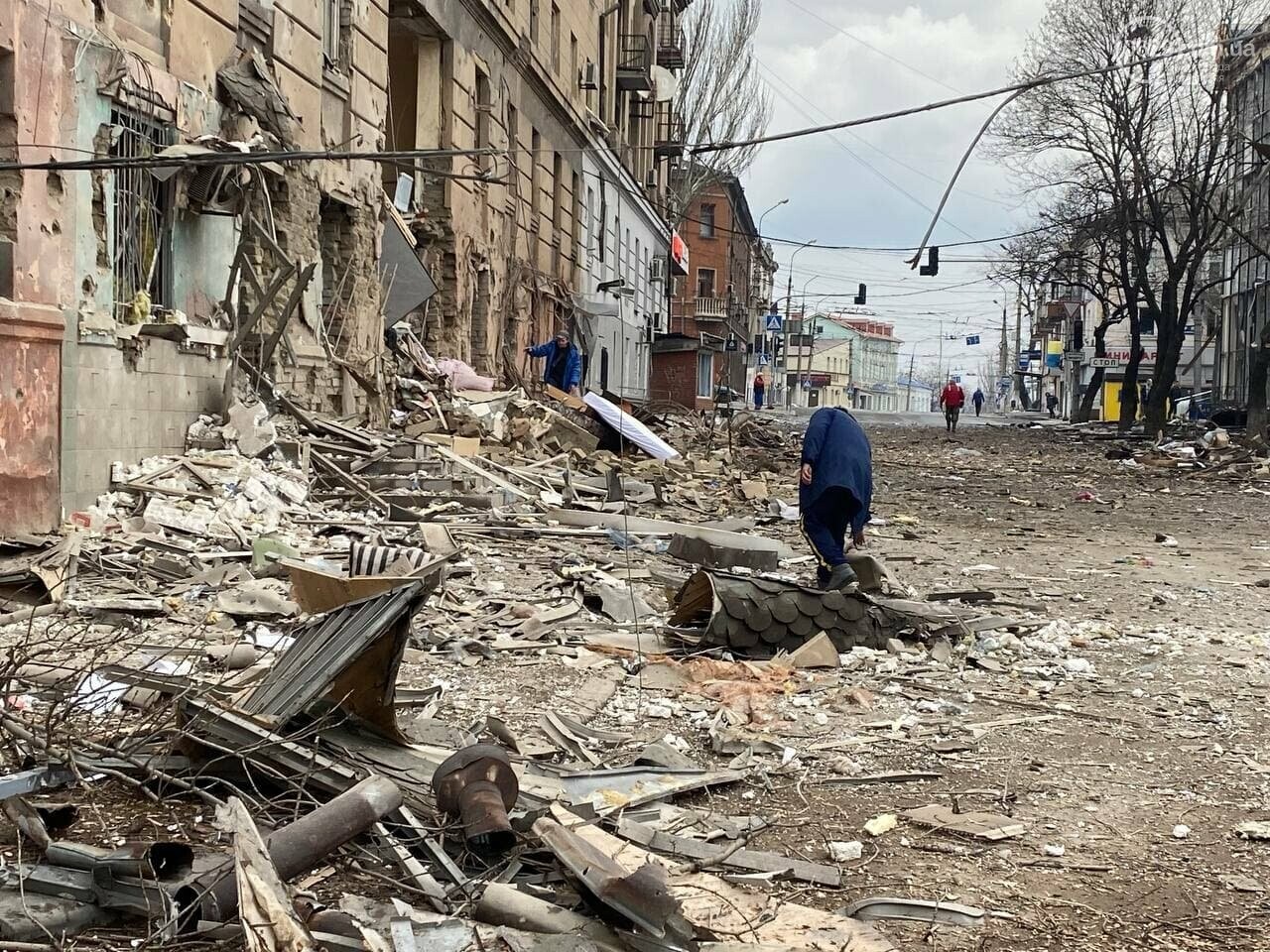
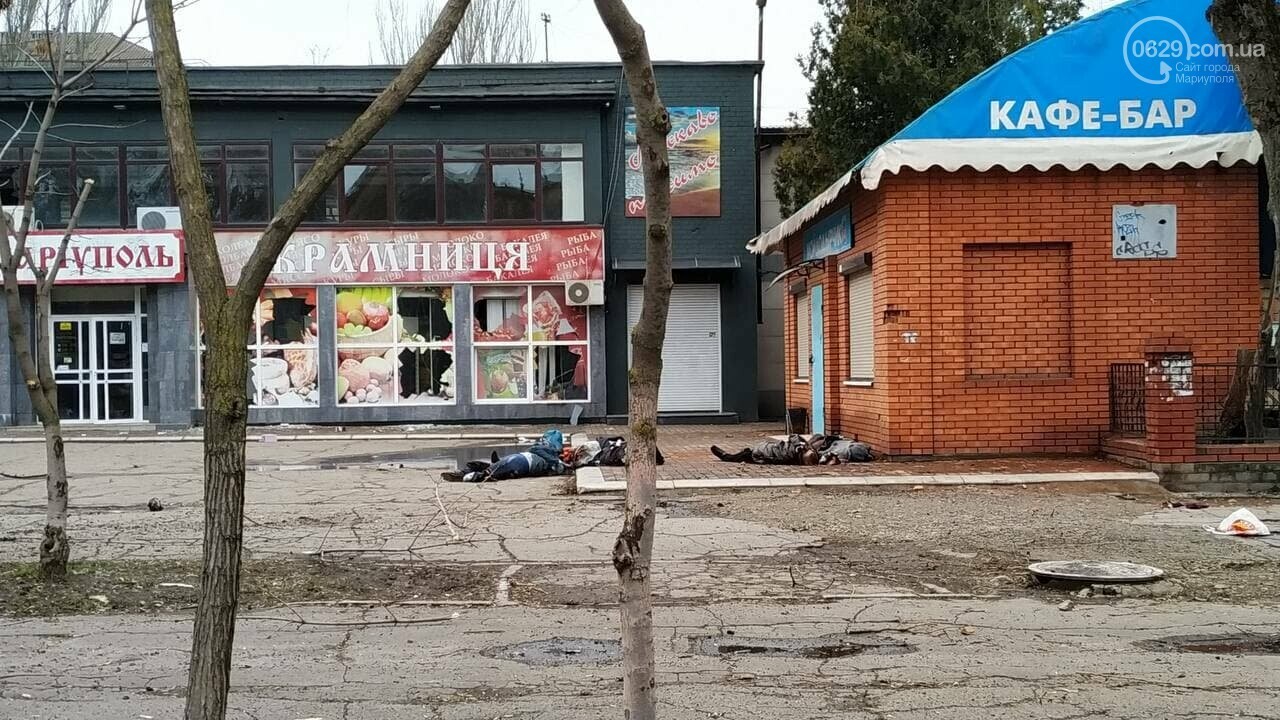
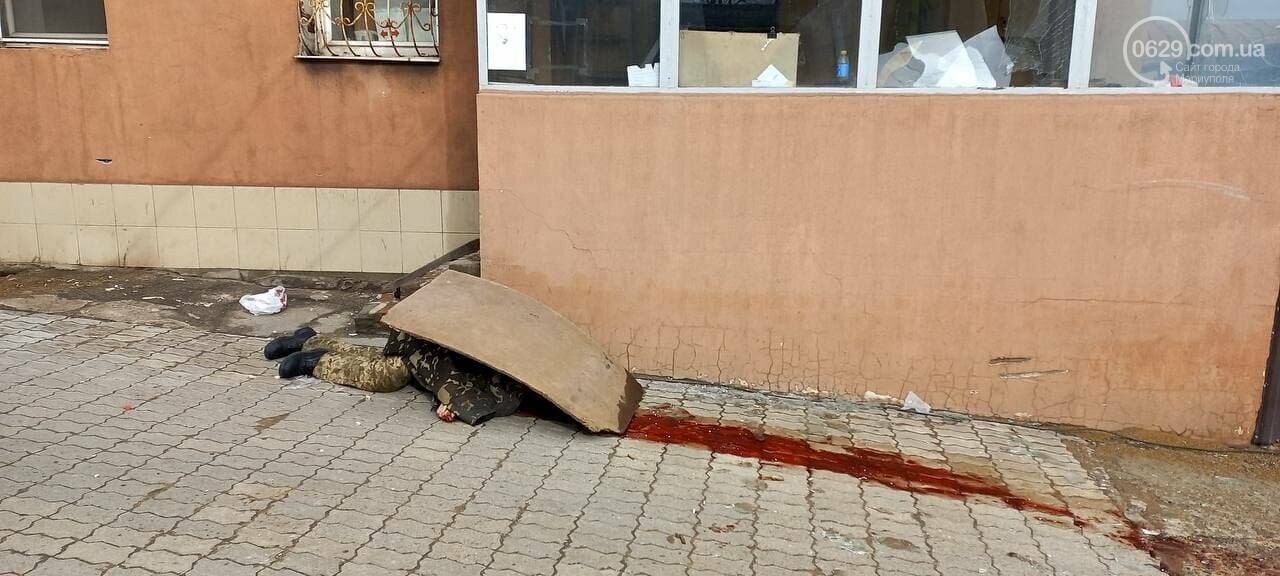
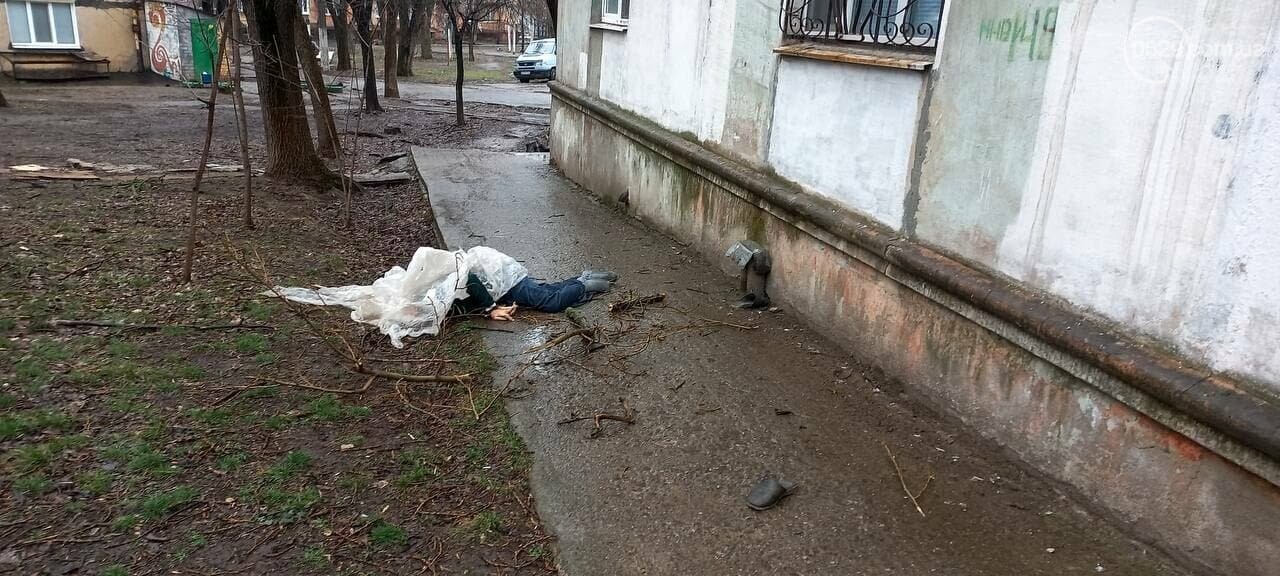
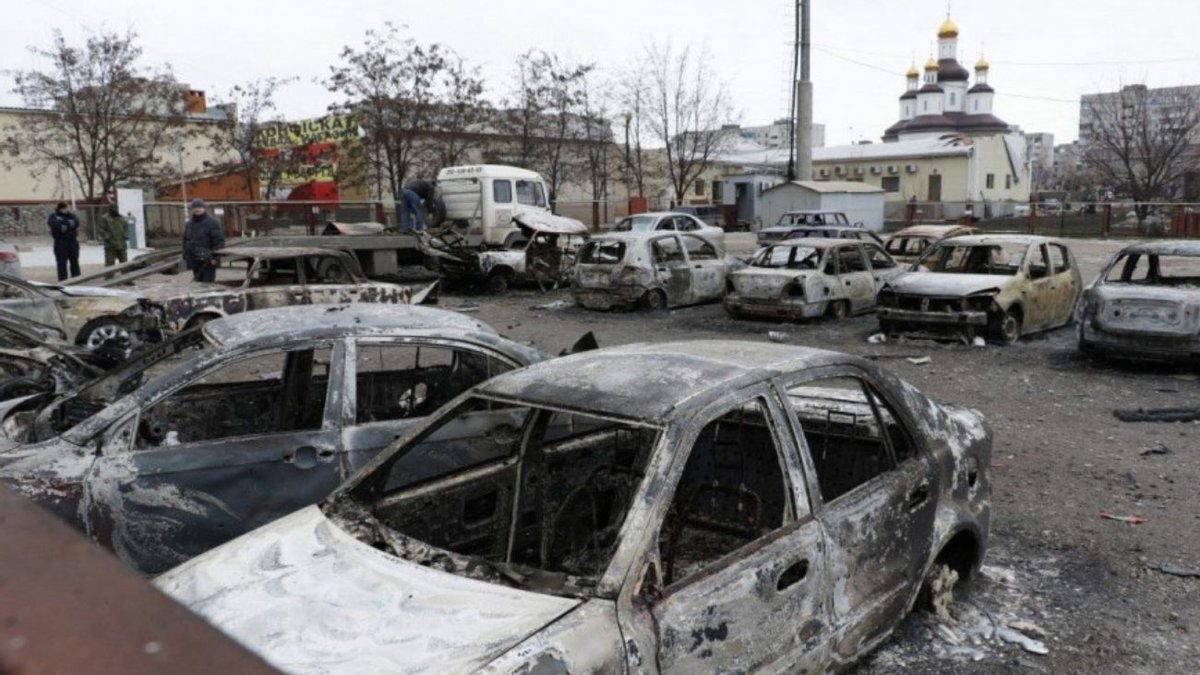
Mariupol after the «liberation» of the Russians
Ethnic and civic identity
Now that Russia's lies about Nazism in Ukraine have finally become apparent to the world, it is important to separate the notions of ethnic and civic identity. When we talk about «Ukrainians» and «Russians», we mean citizenship itself, not ethnicity. Ukraine is an established political nation, where representatives of different ethnic, religious and linguistic groups have coexisted peacefully for many decades. The problem of the proper place of the Ukrainian language in Ukrainian society did exist, but as of the end of 2021, it was finally resolved. What is the essence of this problem?
Since 1783, when Russian Empress Catherine II abolished Ukrainian statehood, Ukrainian language and culture have been discriminated against. In particular, during the reign of the «liberal» Russian Emperor Alexander II, strict restrictions were imposed on the official use of the Ukrainian language. Thus, in 1876, Alexander II signed the so-called «Ems decree».
It was aimed at the total displacement of the Ukrainian language from the cultural sphere. The Ems decree banned the Ukrainian language in many spheres of life (church, music, theater, printing) (ban on the importation into the empire of books printed in Ukrainian) and banned public speeches in Ukrainian. Later, after the transformation of Russia from an empire into a totalitarian dictatorship known as the «Soviet Union», linguicide and the cultural war against all things Ukrainian only intensified.
In particular, the terrible repressions against the Ukrainian intelligentsia and artists during the rule of the Soviet dictator Joseph Stalin are well-known in the world. The tyrant, who together with Hitler started the Second World War by attacking Poland, among other things, carried out purposeful Russification of the territory of Ukraine. In particular, through the genocide of the ethnic Ukrainian population during the Holodomor of 1932-1933, when an artificial famine killed an estimated 5 to 9 million Ukrainians (if we are read by readers from Ireland, you know what I mean).
During the degradation and disintegration of the USSR, Russification continued. This was done by closing schools with Ukrainian as the language of instruction and effectively banning the Ukrainian language at universities. In addition, government officials, the military and other privileged categories of citizens in the USSR who were on the territory of Ukraine had the right to ignore the Ukrainian language.
After the collapse of the USSR, the colonial legacy manifested itself in strong domestic discrimination against the Ukrainian-speaking population. In particular, by using stereotypes about the Ukrainian language as «rural language», «language of underdeveloped aborigines», and other chauvinistic clichés. Thus, for a certain period of time, Ukrainian-speaking citizens of Ukraine were in fact in the role of second-class citizens. The almost complete absence of Ukrainian music on radio, total Russian-language television and book publishing, as well as domestic discrimination against Ukrainians who could not receive services in Ukrainian in Ukraine - such were the sad realities of Ukraine in 2013, when our country was ruled by authoritarian pro-Russian dictator Viktor Yanukovych.
In fact, the reforms in Ukraine after the victory of the Revolution of Dignity in 2014 also consisted of eliminating discrimination against Ukrainian-speaking Ukrainians in Ukraine. At the same time, they did not discriminate against Russian language or culture in any way. After all, after the Revolution of Dignity in Ukraine continued to produce books, movies and TV series, as well as music in Russian. A month ago, a Russian drama theater successfully operated in the heart of our capital, for example.
By no means do I want to compare the situation of Ukrainian-speaking citizens in Ukraine 10 years ago with the situation of, for example, African-Americans in the United States during the period of severe racial segregation. This would be incorrect, as this is not discrimination at the ethnic and racial level, but primarily at the linguistic and cultural level. Here it is more appropriate to cite the example of Ireland and the systematic reduction of the role of the Irish language in this country during the colonial era. Or, as an example, the struggle of French-speaking Canadians in Quebec to develop and preserve their language and culture. In any case, the language and cultural issue in Ukraine was successfully closed after the Revolution of Dignity. So successful that it did not lead to any internal conflicts or even so-called «positive discrimination».
A particularly striking example of the understanding of ethnic and civic identity is the ethnic origin of the leaders of both sides, Ukraine and the terrorist state of Russia.
As I mentioned, the President of Ukraine is an ethnic Jew. The head of the Nikolaev military administration Vitaly Kim who manages defense of the region against the Russian invaders - has the Korean roots. And the mayor of Kharkiv, Igor Terekhov, who, despite the massive Russian war crimes, continues to defend the city's defenses, is an ethnic Russian. However, all these people are first and foremost Ukrainians. After all, they (some earlier and some later) finally adopted Ukrainian civic and cultural identity.
On the other hand, one of Putin's tyrant's closest advisers, Dmytro Kozak, or, for example, the former leader of Russian terrorists in eastern Ukraine, Oleksandr Zakharchenko, are ethnic Ukrainians. However, it is obvious that these people have adopted the Russian cultural and civic identity. They are Russians. Not in the ethnic, but in the civic sense of the word. And these are just the most striking examples.
What is the main difference between these identities? Ukraine has never been an empire in its history, has not waged wars of aggression and as a result does not have in its culture and social practice the so-called imperial legacy, the consequences of which we can see right now in Russia.
So, dear readers, we have identified the following. First, there is no Nazism in Ukraine. Secondly, there is no discrimination in Ukraine. Third, despite the ongoing war in the East, Ukraine has developed relatively successfully and efficiently over the past eight years. So, back to the main question of this text - why is hatred of Russians not Nazism? Why is this normal?
Why hate Russians is normal
Hatred is a completely destructive feeling caused by stressful emotions. On the other hand, this same feeling is completely natural for a person. And in some cases - even vital. Now we are talking about just such a case.
Russia's full-scale war against Ukraine is an unprovoked invasion carried out in a particularly brutal, barbaric manner, in violation of all possible norms and rules of warfare, as well as international humanitarian conventions. And this is a fact. The vast majority of Russian citizens (according to various estimates, more than 70%) fully or partially support the Russian invasion of Ukraine. And this is also a fact.
Now support for the war in Russian society has declined somewhat, but we need to understand why this is happening. Not because of horrible war crimes against civilians. And not even because of the unprecedented sanctions of democracies around the world. Moreover, even unprecedented military losses for the 21st century (more than 12,000 Russian soldiers killed in two weeks) have not led to strong civil discontent.
The main reason for the slight decline in support for the war in Russian society is that Russia is losing the war. And in the information, and in the economic, and above all - in the military context. For Russians, the fact that the army and the people of Ukraine have defeated Russian ground forces in many directions and shown the world the weakness of Russia's corrupt army is a «disgrace to the empire.» The empire cannot lose the war, and not to anyone - «stupid primitive aborigines», «second-class people», «miserable peasants».
And this, and not the footage of executed women, murdered children and destroyed cities, is the greatest psychological trauma for the collective consciousness of Russians. The «greatness of the empire», its «economic power» and «military power» proved to be banal propaganda lies. Like «Nazism» in Ukraine.
And this is a very important moment to understand what type of society we are dealing with. Russian cultural figures, bloggers and influencers are now crying on those social networks where they can still go. However, they are doing so not because of genocide against civilians, but because of the inability to buy a Big Mac with french fries or fly on vacation to Egypt. This says a lot about the level of empathy in Russian society, which in the conditions of information autocracy inevitably erodes and degrades as a social virtue. Particularly striking examples of this are the conversations of the Russian military intercepted by the Ukrainian secret services, who openly and unscrupulously tell their relatives about looting and executions of civilians, the killing of children with small arms and the robbery of corpses.
So, the simple message I want to convey is that in Russia, where civil society institutions are completely degraded and propaganda fits perfectly with the chauvinistic sentiments of the majority of the population, the imperial paradigm is the fundamental foundation of society. It stands on the history of Russia, which for centuries conquered, assimilated, or simply destroyed neighboring nations. it is based on Russian culture, because Dostoevsky and Tolstoy, who are so loved in the West, were the ideologues of Russian Orthodox fascism. It was these people, like many other Russian philosophers and writers (Berdyaev, Ilyin, etc.), who created and spread the thesis of Russian exclusivity, of the messianic purpose of Russia as an Orthodox empire.
In modern Russia, this is the legacy of the Soviet Union, which was based on Russia, and Russian identity was the basis for its leaders. One can mention the ethnic Georgian Joseph Stalin, who after the victory in World War II (which he also unleashed) raised the glass for the «great Russian people», while forgetting other ethnic groups in the Soviet Union. In particular, Ukrainians, which is especially cynical. Let me remind you that the territory of Ukraine, as well as its population, was occupied by the Nazis for the longest time during the Second World War and suffered the greatest losses.
In recent history, there is a clear example of a very similar ideology, culture and population of the country - Serbia. I hope everyone remembers the Serbian atrocities, ethnic cleansing and mass war crimes against civilians during the Yugoslav war in the 1990s. It should be noted that it was only after NATO intervention in 1999 that the threat posed by Serbia and its population infected with «Orthodox imperial fascism» to the surrounding countries was finally stopped.
Thus, as of 2022, hatred of Russia, Russians, and Russian culture is perfectly justified and normal. After all, as the practice of the last 8 years has shown, when the West tried to stop Russia's aggressive policy through negotiations, concessions and compromises, this does not work at all. Both Russian political elites and, above all, the Russian population perceive such behavior as weakness. At the same time, every time Russia's aggression receives an uncompromising and worthy rebuff, it stops.
The «good» Russians and the «liberal» Russian opposition
In the context of the tragic events of the Russian invasion of Ukraine, the way in which the so-called «Russian liberal intelligentsia» reacts is particularly significant. Speaking of the Russian liberal intelligentsia, we reiterate their ethnic origins to illustrate once again that by «Russians» or «Ukrainians» we mean social and cultural identity, but not ethnicity. Consequently.
For example, a famous Russian writer and public intellectual Boris Akunin (real name - Grigori Chkhartishvili, ethnic Georgian), gave an interview on the Russian invasion. Like many Russian public intellectuals, he condemned the military invasion. But it is important to understand exactly how he did it.
Speaking of modern Ukraine and Russia, he compared the two countries to Germany, which was divided during the Cold War. He compared Ukraine with West Germany and Russia with East Germany (which had been occupied by Soviet troops before the fall of the Berlin Wall). At first glance, the comparison is pleasant for Ukraine, but only at first glance.
Another Russian public intellectual and blogger, Maxim Katz (an ethnic Jew) who has always consistently condemned Putin's policies, has also strongly condemned Russia's invasion of Ukraine. Speaking about the colossal losses of Russian troops and war crimes against the Ukrainian population, he said he was in pain. After all, according to him, «our» Russian troops are killing «our» civilian population in Kharkiv and Mariupol. And they themselves die from «our» Ukrainian military
In both cases, we see how «liberal» and «opposition» Russian intellectuals are depriving Ukraine and Ukrainians of subjectivity. This is another narrative of Russian propaganda, which infected the so-called Russian liberals. Its essence is Ukraine as the best version of Russia. Ukraine is a post-Soviet country that has been able to build a competitive democracy. And in this country live «the same people as we are, the same Russians.»
As we can see, even Russian oppositionists and intellectuals who have lived abroad for years and decades (like Akunin) and enjoy all the benefits of a developed democratic society are not ready to give Ukraine and the Ukrainian people the right to self-determination.
From their lips we hear the same theses of Russian state propaganda, only slightly repainted in a more peaceful tone. Theses about the «fraternal» people, or even about the fact that Ukrainians and Russians are «one people». Even those of Russia's intelligentsia who are aware of the civilizational catastrophe that Putin is dragging their country into are not ready to acknowledge that Ukrainians are a separate people, with their own language, culture, and civic identity. With its history, the defining narrative of which for the last 300 years is the struggle for liberation from Russian oppression.
Moreover, some Russian «liberal» emperors openly criticize Putin for not trying to annex Ukraine and dissolve Ukrainians in Russia. Rather, the form he chose was brute and savage military force, a barbaric invasion. According to them, the «soft power», namely - the dominance of the Russian language in the Ukrainian cultural and public space and control of Russian business in the Ukrainian economy would be more effective. By the way, it is difficult to disagree with them.
So, what conclusion do I want to convey to you, as an ordinary Ukrainian, whose pedigree has Polish and Hungarian roots. The Russians want to destroy us - either physically, or mentally and culturally. We want to live. Therefore, a compromise is impossible. Absolutely.
ІА "Вголос": НОВИНИ